
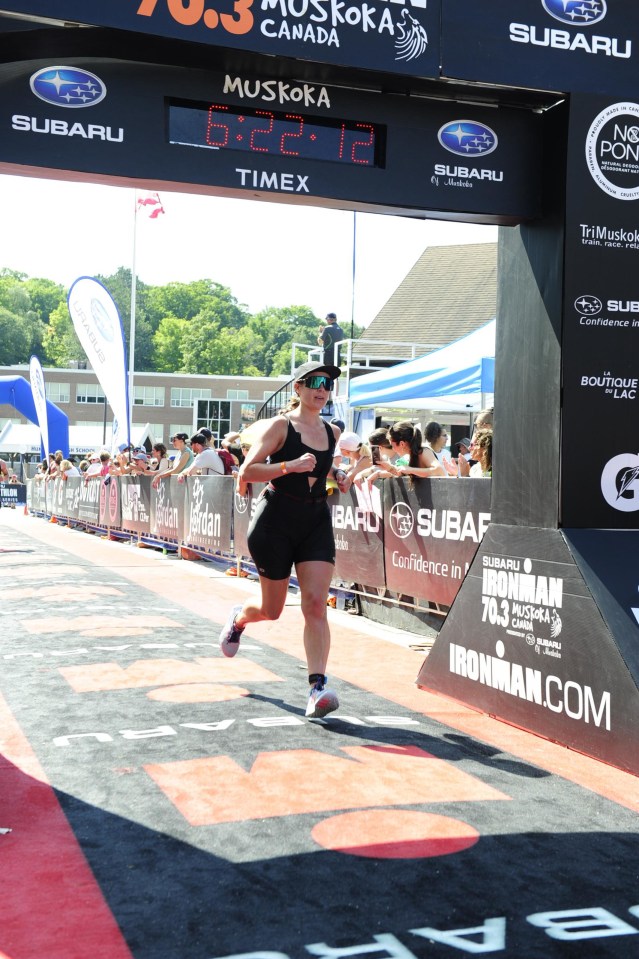
Typing this in December 2021 feels like Muskoka 70.3 never actually happened. After a year and a half of being knocked down from the panorama — I truly couldn’t believe my ears when I learned Muskoka 70.3 would in fact happen on August 30th, 2021. And as I write this, Omicron is surging, and any sort of large gathering that involves sweat feels like a fever dream.
I had originally signed up for this race weeks after Whistler 70.3 2019, to reclaim the distance and feel better overall about my results. It was cancelled in 2020 due to, well, we all know, and I was automatically deferred to June 2021. In the lead-up to June, Ironman made the decision to move the race to August 30th. It was the right decision, because it happened – safely, and within what was allowed at the time.
This race was hard. Both mentally and physically. The uncertainty if it would happen. The sheer excitement that it was happening. And the euphoric moments in the lead-up, reminiscing over a year lost.
Transitions
Unlike Whistler, Muskoka’s transition was much friendlier with T1 and T2 in the same spot. I was grateful to not spend the entire day before organizing my transitions, however, likely could have used a few extra minutes on the morning of race day. We got stuck in some intense weather and traffic, and I had about five minutes to get set up. I lucked out (kind of) as I missed the torrential downpour, so my things stayed relatively dry.
Swim
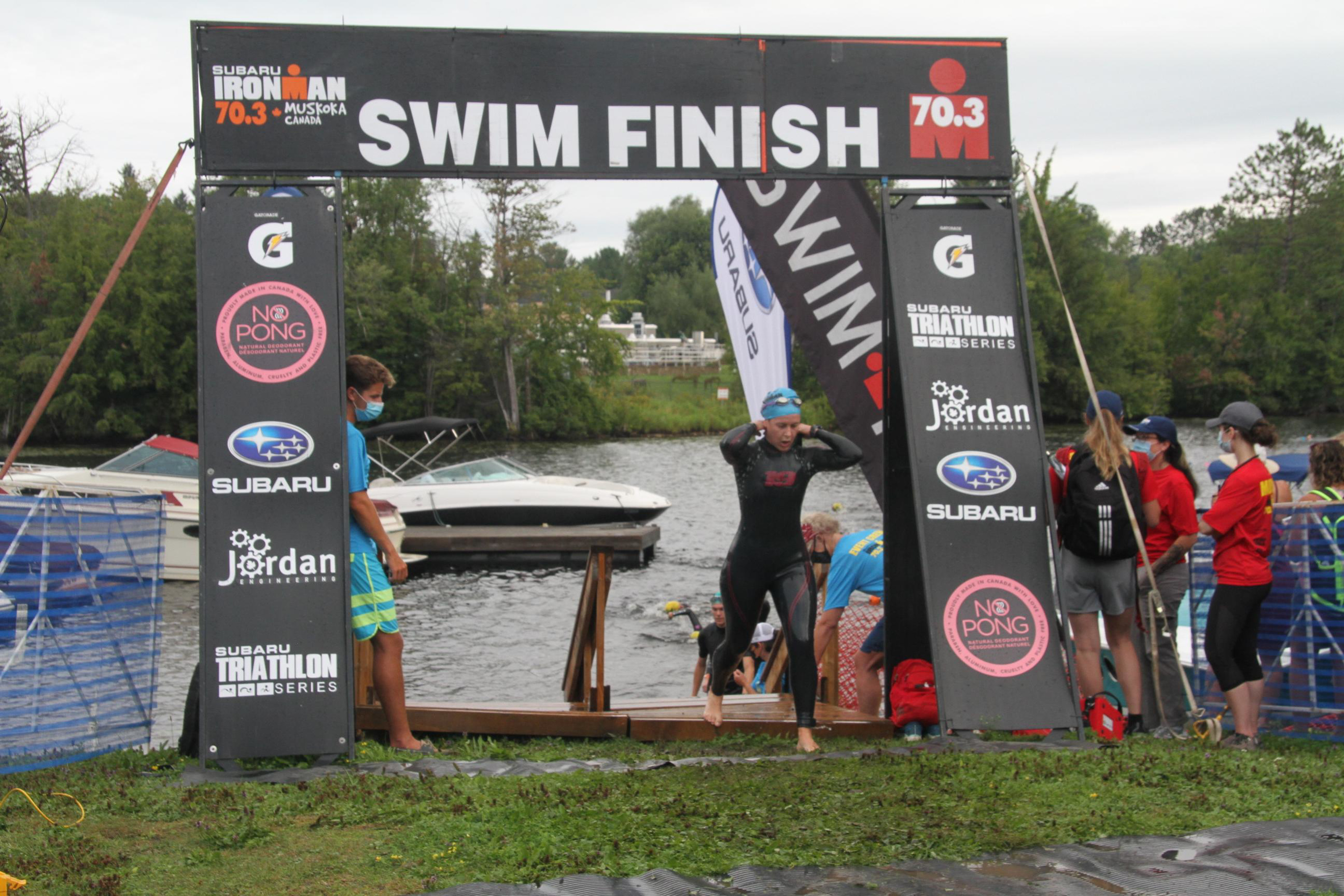
I loved this swim. I was warned that it’s difficult to spot given it curves around the river, but I was actually loving that I couldn’t see the finish line. Often times during a swim (even in an Olympic distance) the buoy can feel really far away, and somewhat discouraging as it feels like you’re not making progress. This swim was not that. It was a self seeding start (same as Whistler), and I really enjoyed that. I will say, however — it was the first time standing in a group of people without a mask — and it felt really strange. Also: pro tip… wear flip flops from transition to the swim start and ditch them in the forest (but pick up after, of course!). It felt like a kilometre walk from transition to the start, and wow, my feet weren’t loving the gravel bits.
Ride
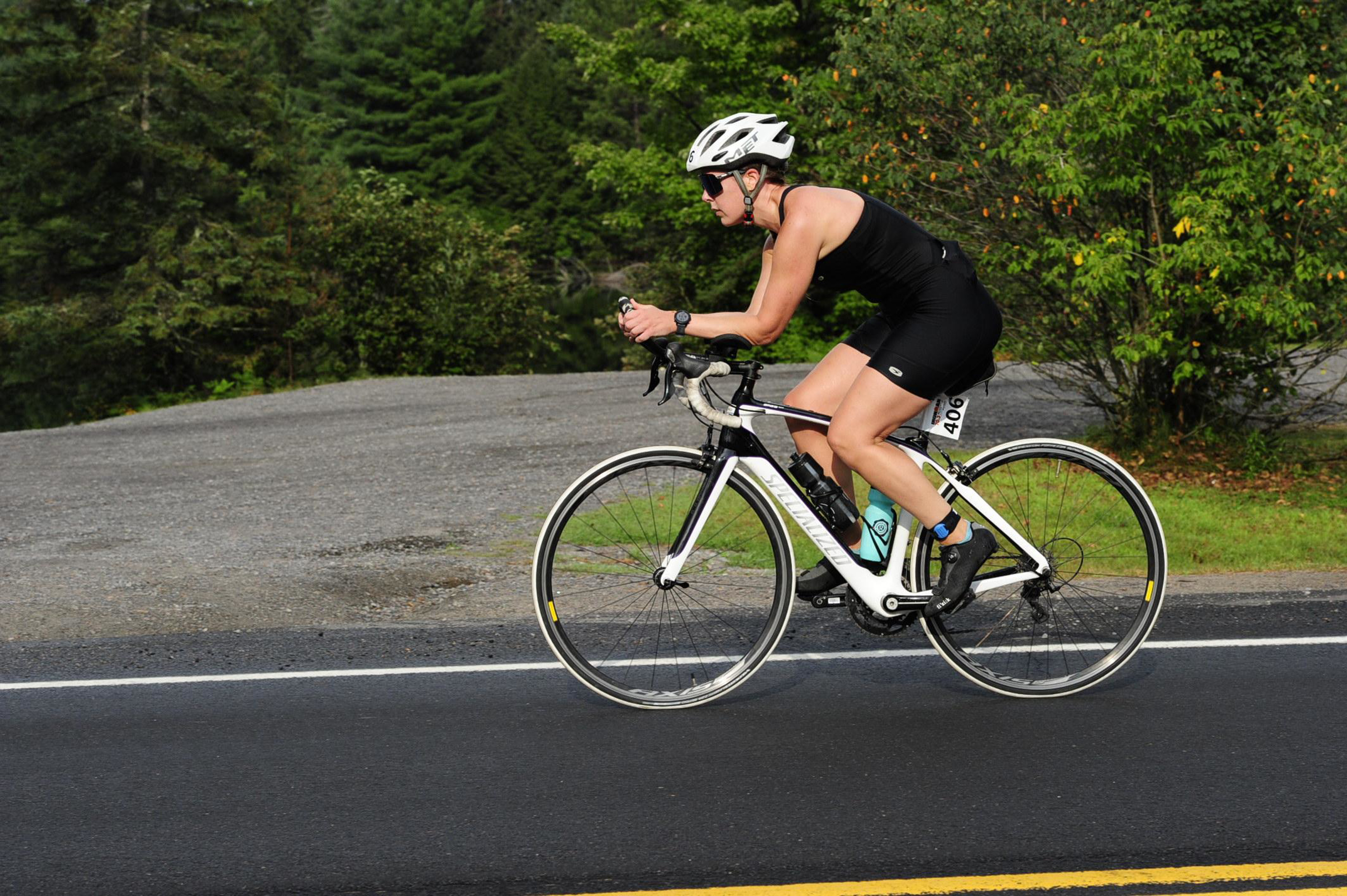
About my poor transition set up… it showed during T1. I felt disorganized and was spending too long thinking about what food I needed to bring. I somehow left my PB&J sandwich behind, despite making the decision to eat real food during the ride to better prepare for the run. I didn’t let it get to me, as I was feeling really good after the swim and excited to lean into the 90km hilly ride.
I wish I took better notes immediately after this race, because this ride was *interesting*. I can’t recall when the rain started, but what felt like 10km in, it started pouring rain. And then it turned into a full blown electrical storm, with intense lightning and loud, booming thunder. I was in a good groove, but was also wondering, should we be biking right now?
The surge of water was relentless. Pooling on the roads. Slamming into our face. We were absolutely soaked.
Then visibility took a huge downturn. The rain started pummelling us, it was hard to see cyclists ahead, and I became nervous about the traffic that was hurrying home from the cottage given the pending storm. We climbed, we descent, we climbed, we descent. The flow of the route was a lot of fun. There were medics biking around us (this definitely didn’t happen in Whistler) and it was nice to have the comfort of knowing we could tap someone if needed.
The chafing was so real given we were soaking wet during the entire ride, and I forgot how unforgiving tri shorts are in comparison to the luxury of road cycling shorts.
The main thing running through my head was: amazing, it will be overcast and raining during the run. But I wouldn’t be so lucky.
Run
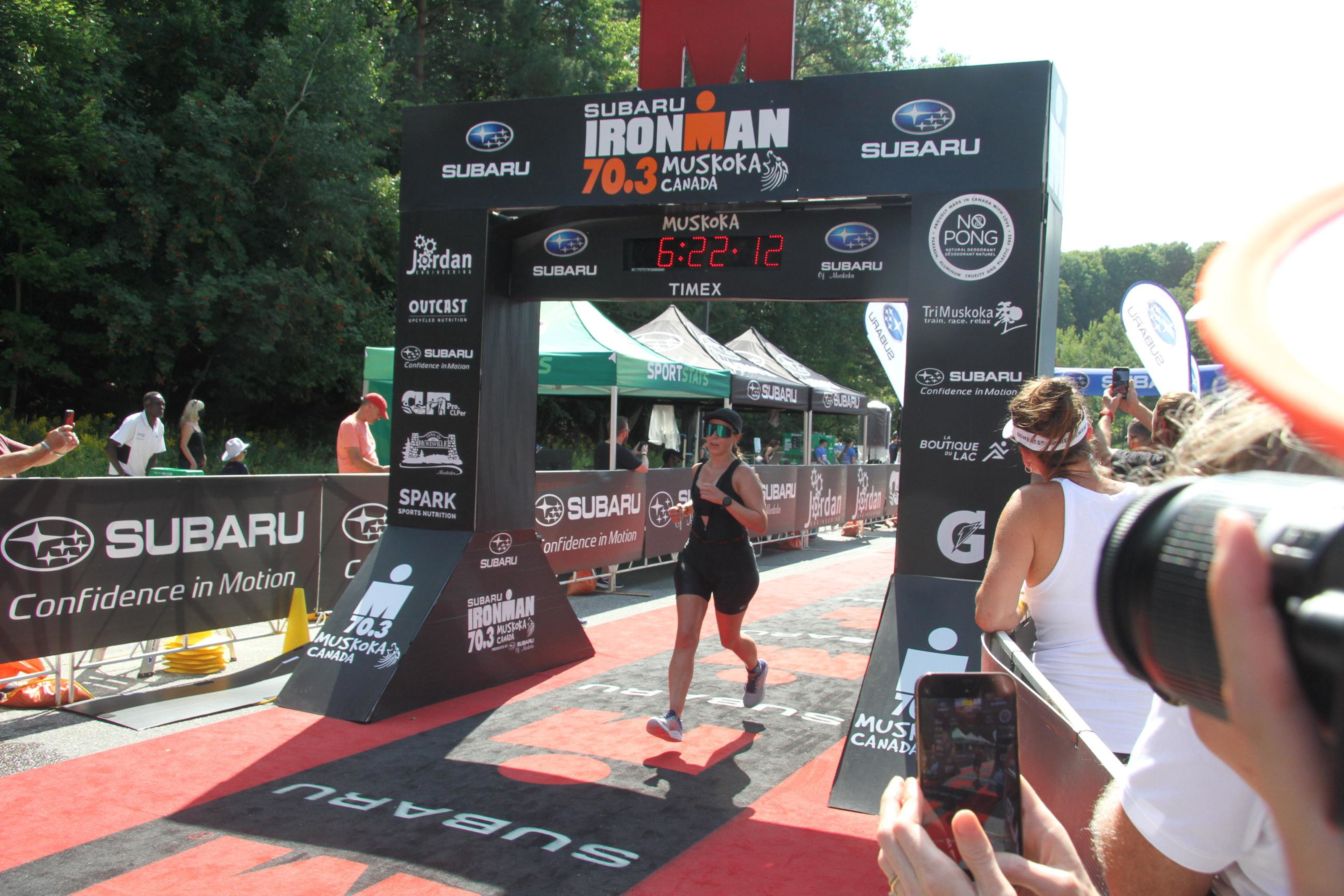
The run is my weakest in a half Ironman. It usually falls around noon, and is the hottest part of the day. I was really hoping for clouds and rain, but sadly didn’t get my wish. We were baking in the hot sun, much hotter time of day than Whistler, and just as humid as most of August had been in Ontario.
Humidity aside, this course was so tough and I nearly cried during the first hill. Due to construction downtown Huntsville, the course had shifted, and was filled with rolling hills. It was also two loops, so you know what you had coming.
I struggled on this run. The juxtaposition of weather between the ride and run was so strange: mentally, it felt like we were being punished, and I couldn’t shake how hot I was. It felt chlausterphobic. Not unusual to me, I am also heavily influenced by my surroundings. If I see 90% of people walking up a hill, I’m going to join them. The minute I stop to walk is the minute it gets dangerous, and the will to keep running becomes harder.
My A goal for this race was to finish in under 6-hours, and my mental math wasn’t mathing, and I finished in 6:01. I was still happy with that time, but all in all the race taught me a few life lessons.
- I am often at my best when others aren’t; I truly loved the rain wrench – it motivated me on the ride and put me in a great mood.
- I need to mentally overcome the run; how can I be motivated to run when everyone around me is walking?
- Nutrition is my downfall; I was under-nourished in this race, how do I ensure I fuel my body to maintain my endurance?
We’ll see when my next half Ironman (or full Ironman…) is, but for now, I’m enjoying the fact that it’s over and I can get back to my new love: mountain biking.
Link to Strava swim: https://www.strava.com/activities/5873989171
Link to Strava run: https://www.strava.com/activities/5874002651
Link to Strava ride: https://www.strava.com/activities/5873997021
 meghan jeffery